A concert about the music of the Americas takes an unexpected turn when Max – an energetic but impulsive young boy – makes his way onto the stage to “help” the orchestra.

Soon Max is on a whirlwind adventure that takes him from the concert hall to the vibrant lands of Latin American culture where – with the help of his new friend, Mambo the dog, the orchestra and the audience – Max learns the magic of Latin rhythms and how to “dance” with the music. Audiences rise to their feet, dancing to the rhythms of Latin America in Platypus Theatre’s most interactive show to date.

For information on our COVID-19 safety protocols, please visit here.

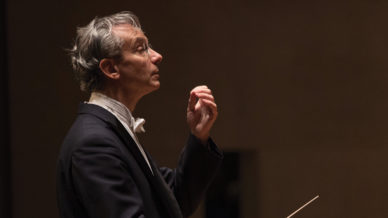
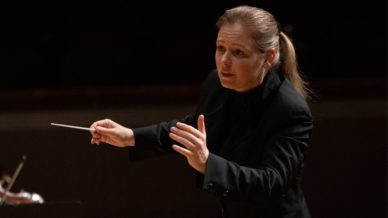
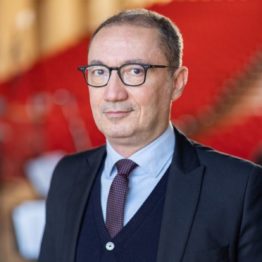
MAURICE COHN CONDUCTS
Marena & Roger Gault Chair
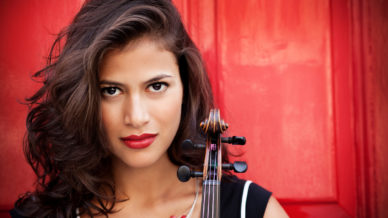
RUBÉN RENGEL VIOLIN, Sphinx Soloist
XAVIER FOLEY DOUBLE BASS, Young Concert Artists and Sphinx Soloist

BEETHOVEN Overture to Creatures of Prometheus
BOTTESINI Gran Duo Concertante for Violin, Double Bass and Orchestra
MASON BATES Philharmonia Fantastique | WORLD PREMIERE

PROGRAM NOTES
by Mason Bates

An orchestra tunes – and immediately, a sense of anticipation and wonder ripples through the room. As this super-instrument brings its marvels of engineering together into a single pitch, we are witnessing both art and science. The same orchestra that explores our emotional depths is also our finest example of interactive technology.

The ‘making of the orchestra’ that has occurred over centuries continues into the present day with Philharmonia Fantastique, a concerto for orchestra and animated film. Only recently in its spectacular evolutionary history has the orchestra incorporated digital sounds and projection screens, offering the perfect medium for a kinetic exploration of musical instruments and how they work. Guided by a mercurial Sprite, we fly inside a flute to see its keys up close; jump on a viola string to activate the harmonic series; and zip through a trumpet as its valves slice shafts of air.

Inspired by a desire to offer my own kids a fresh guide to the orchestra, the piece was created with director Gary Rydstrom and animator Jim Capobianco during visits to Skywalker Ranch, George Lucas’s campus of creativity north of San Francisco. With their extensive film experience – Gary won Oscars for his dinosaur sounds in for Jurassic Park, Jim wrote the story for Pixar’s Ratatouille – they helped solve many of the film’s unique puzzles: namely, how to introduce the many facets of the orchestra without using words.

Sometimes accompanying me to the Ranch were my kids and a posse of their friends, playing the role of a slightly suspicious focus group. They responded best to an exuberant piece of art, not a didactic piece of pedagogy, that has elements of mystery and darkness. Equally important is the Sprite, whose journey of self-discovery brings a crucial emotional angle to the story. The Sprite is formed in the work’s opening minutes from a primordial soup of abstract animation, with its arms and legs representing the four ‘families’ of the orchestra: woodwinds, strings, brass, percussion. Represented by a simple yet harmonically wandering piano melody, the Sprite soon dives into the orchestra to explore the instruments from the inside out.

Each family speaks its unique language: noir-ish jazz for the woodwinds; bending lyricism in the strings; dark techno for the brass; and drum-corps in the percussion. Having presented themselves separately, their attempt to play together fails so spectacularly that the Sprite shatters back into the primordial darkness. Only through learning each other’s languages do the different instrument families – as different as the races on earth – fuse together to resurrect the Sprite and become The Orchestra, one of the greatest human creations.

Check these out:

Trailer (3:30 minute version)
Trailer (60 second version)
Behind the Scenes: Making the Sprite
Behind the Scenes: Inside the Cello
Behind the Scenes: Inside the Woodwinds

MUSIC BY MASON BATES | DIRECTED BY GARY RYDSTROM | WRITTEN BY MASON BATES & GARY RYDSTROM | ANIMATION DIRECTION BY JIM CAPOBIANO | PRODUCED BY ALEX DE SILVA & MASON BATES | EXECUTIVE PRODUCERS JODY ALLEN, ROCKY COLLINS, & RUTH JOHNSTON | VULCAN PRODUCTIONS | COMMISSIONED BY CHICAGO SYMPHONY ORCHESTRA, SAN FRANCISCO SYMPHONY, PITTSBURGH SYMPHONY ORCHESTRA, DALLAS SYMPHONY ORCHESTRA, NATIONAL SYMPHONY ORCHESTRA, SAKANA FOUNDATION, JOHN & MARCIA GOLDMAN FOUNDATION

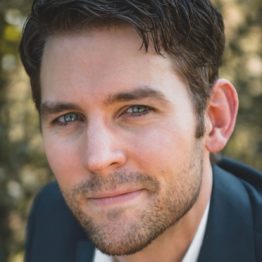
Mason Bates

Mason Bates

Composer

Read More
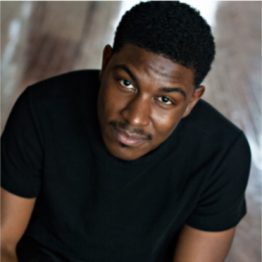
Xavier Foley

Xavier Foley

Double Bass

Read More
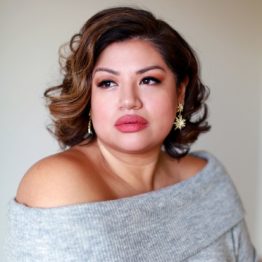
Rubén Rengel

Rubén Rengel

Violin

Read More

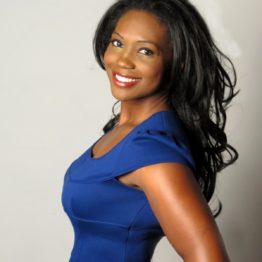
RENÉE ELISE GOLDSBERRY vocalist

Don’t throw away your shot to hear Renée Elise Goldsberry, the original Tony Award-winning “Angelica Schuyler” from Broadway’s megahit Hamilton in a program of Broadway, pop and soul.

Don’t miss this powerhouse vocalist as she sings selections from Broadway hits, including Hamilton, Rent and The Lion King, plus songs by Aretha Franklin, Curtis Mayfield, Bob Dylan on the Meyerson stage.

Please note: This concert does not feature the Dallas Symphony Orchestra.

Renée Elise Goldsberry

Renée Elise Goldsberry

Vocalist

Read More

JEFF TYZIK conducts
UNITED STATES NAVAL ACADEMY MEN’S & WOMEN’S GLEE CLUBS
MEMBERS OF THE UNITED STATES NAVAL ACADEMY PIPES & DRUMS BAND

Join conductor Jeff Tyzik for this uplifting tribute honoring our nation’s men and women in uniform. Lift your spirits with this rousing celebration of our great nation, as Patriotic Pops salutes our veterans with your favorite songs and anthems. The US Naval Academy shares their internationally acclaimed Glee clubs and their Pipes and Drum Band with Dallas. Hooyah!

Recent appearances include The Kennedy Center Honors (CBS), the National Pentagon Memorial (9/11) Dedication plus performances at Carnegie Hall and Washington’s Kennedy Center.

JEFF TYZIK PRINCIPAL POPS CONDUCTOR DOT & PAUL MASON PODIUM

Jeff Tyzik

Principal Pops Conductor

Dot & Paul Mason Podium

Read More

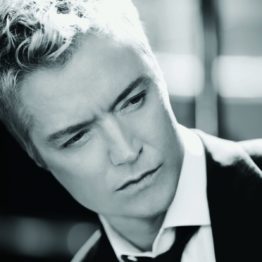
Chris Botti and Band

For over two decades, Grammy Award-winning master trumpeter and composer Chris Botti has amassed a spectacular variety of honors, including multiple Gold and Platinum albums, to become the nation’s largest selling instrumental artist.

His mesmerizing performances with a stunning array of legends such as Sting, Barbra Streisand, Tony Bennett, Yo-Yo Ma, Frank Sinatra, Paul Simon and Andrea Bocelli have cemented his place as one of the most brilliant and inspiring forces of the contemporary music scene. Whether he’s performing with illustrious symphonies or at renowned venues around the globe, his unparalleled crystalline and poetic sound transcends musical boundaries.

Chris Botti

Trumpet

Read More

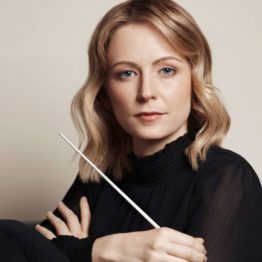
GEMMA NEW conducts

DONNACHA DENNEHY Memoria | US PREMIERE
RAVEL Rapsodie Espagnole
GRAINGER Pastoral, from In a Nutshell
MUSSORGSKY (ARR. RAVEL) Pictures at an Exhibition

Be one of the first to hear a new orchestral work by Donnacha Dennehy, a piece the composer says is “inspired by the way people (or our inventions of those people) live on vividly in our minds, even when they are no longer there in real life”.

Ravel’s colorful Rapsodie Espagnole is a magnificent musical homage to Spain and all its beautiful sights and sounds.

To end this enchanting program Principal Guest Conductor Gemma New takes you on a musical gallery tour in Mussorgsky’s most famous composition to view ten pictures on exhibit, from the eerie Parisian “Catacombs” to the tumultuous pealing bells of “The Great Gates of Kiev.”


View Program Notes


Make a gift, and double the impact of your support! Thanks to a generous gift from our friends at the David M. Crowley Foundation, all new and increased gifts made by May 31, 2022 will be matched dollar-for-dollar, up to $75,000. Give Now

For information on our COVID-19 safety protocols, please visit here.

Gemma New

Gemma New

Former DSO Principal Guest Conductor

Dolores G. & Lawrence S. Barzune, M.D. Chair

Read More

Program Notes

by René Spencer Saller

The Dublin-born composer Donnacha (DON-uh-kuh) Dennehy’s eclectic body of work includes large-scale orchestral pieces, three operas and a “docu-cantata,” electronic music, and compositions for solo instruments and chamber ensembles. His distinctive style reflects a wide range of influences, from minimalism to traditional Irish sean-nós (“old style”) singing. In 1997 he founded the Crash Ensemble, Ireland’s leading proponents of new and experimental music. He has fulfilled commissions from the Kronos Quartet, Dawn Upshaw, Augustin Hadelich, Alarm Will Sound, Bang on a Can, the Irish National Opera, the Saint Paul Chamber Orchestra, the Los Angeles Philharmonic, and Opera Theatre of St. Louis, among many others, and his music is performed in major venues and festivals throughout the world. Recordings of his compositions are available on the Nonesuch, NMC Recordings, Bedroom Community, and Cantaloupe Music labels.

Dennehy served as composer in residence for the Forth Worth Symphony Orchestra from 2013–14. Formerly a tenured lecturer at Trinity College Dublin, he joined the music faculty at Princeton University in 2014 and currently lives in the United States. In 2021 he received a Guggenheim Fellowship.

He wrote Memoria in 2021. Jessica Cottis led the RTE Symphony Orchestra in the world premiere, which took place on February 4, 2022, at the National Concert Hall in Dublin. This is its first performance in the United States.

The Composer Speaks
“Memoria is a piece inspired by the way people (or our inventions of those people) live on vividly in our minds, even when they are no longer there in real life. I’ve never felt this more strongly than in the last two years, when more than ever we have been made aware of the fragility, preciousness, and precariousness of life itself. This year, I lost two mentors who were of immense importance to me: Louis Andriessen and Hormoz Farhat. Memoria itself has a trajectory from the ethereal and elusive to the firmly present. It draws on some material from my opera The First Child that was based on a disguised melody. In Memoria, however, the disguised melody is gradually revealed, eventually appearing fully fledged in shuddering gasps. It is dedicated to the memory of Hormoz Farhat, my composition professor at Trinity in Dublin, and later my friend, someone who had a remarkable impact on the course of my life.” — Donnacha Dennehy
Rapsodie espagnole is so rich in the sounds of Spain that you’d never guess its French creator knew the country almost exclusively through his Basque mother. As the Spanish composer Manuel de Falla wrote, “How was I to account for the subtly genuine Spanishness of Ravel, knowing, because he had told me so, that the only link he had with my country was to have been born near the border!”

Although his family moved from the French Pyrenees to Paris when Ravel was still an infant, he retained a lifelong nostalgia for the music of Spain. Rapsodie espagnole, composed between 1907 and 1908, is among his first major works for orchestra. In his early 30s by that point, and a graduate of the Paris Conservatoire, he had already produced a string of impressive chamber works as well as the opulent orchestral song cycle Shéhérazade. (One of the movements in Rapsodie espagnole, a Habanero, is an orchestrated version of an 1895 work for two pianos, which he didn’t publish until 1907.)  His meticulous attention to orchestration is evident throughout the four movements of Rapsodie espagnole, which incorporate Spanish-inflected castanets and tambourine, shadowy low winds, muted brass, and other beguiling instrumental colors.

A Closer Listen

The first movement, “Prelude to the Night,” is suffused with the silvery glow of an Iberian moonrise. A brief descending motif repeats hypnotically until clarinets and bassoons break in with concluding cadenzas. Named for a regional flamenco dance, “Malagueñas” is a lively, harmonically ambiguous miniature, with pizzicato double basses and strummed cellos standing in for the more traditional guitar. A surprisingly languid English horn solo closes the movement.

Ravel’s tempo indication for the next movement, the aforementioned “Habanero,” is “Rather slow, and with a weary rhythm.” Despite being named for a seductive Cuban dance, this “Habanero” is thought to be based on a song that Ravel’s mother taught him. On the manuscript for the two-piano version, the composer added a line from Baudelaire: “In the perfumed land that the sun caresses.”


The wistful English horn returns in the finale, which is otherwise lusty and festive, in keeping with its title, “Feria” (“Fair,” or “Festival”).

Born and brought up near Melbourne, Australia, Grainger was homeschooled by his mother, Rose Aldridge Grainger. Largely self-taught, Rose was intelligent and disciplined—and a strict disciplinarian. (Her harsh punishments may have sparked the composer’s later obsession with flagellation.) With an iron fist and a small team of tutors, she directed her only son’s education, imparting her love of music, visual art, and Nordic literature. In 1893 the 11-year-old boy wrote his earliest known original composition for piano: “A Birthday Gift for Mother.”

A piano prodigy, Grainger made his public debut in Melbourne when he was 12 years old. Starting at age 13, he attended the Hoch Conservatory in Frankfurt, Germany, for six years. The ever-loyal Rose followed him there, working as an English teacher to supplement the small stipend she received from her estranged husband, Percy’s father. After Grainger graduated, he and Rose lived in London, where the young man’s appealing looks, personal magnetism, and aggressive virtuosity brought him many wealthy and well-connected female admirers. He even met the Queen.

At the outbreak of the First World War, Grainger finally left Rose and relocated to the United States. He served as a musician in the U.S. Army from 1917 to 1919, becoming a U.S. citizen in 1918. He never returned to Australia.

In 1922 Rose killed herself, and Grainger, grief-stricken, spent several years traveling the world. After marrying in 1928, he settled in Westchester County, New York, where he taught, composed, lectured, and occasionally gave recitals. Legendary for his athletic technique and weird habits, Grainger liked to vault over his piano instead of simply walking around it. Among his many other eccentricities was his preference for arriving on foot to the towns and cities where he was scheduled to perform.

Poor health and cognitive decline marred his final years. In the end Grainger decided that he was a failure. He didn’t give up entirely, though: he gave his last concert in 1960, less than a year before his death at 78. Although he bequeathed his skeleton to the Grainger Museum, the curators opted to leave his remains in the family vault, alongside his mother’s ashes.

Pastoral, In a Nutshell

Structured in four movements, or sections, In a Nutshell takes about 20 minutes to perform. In 1916 Grainger conducted the premiere of the orchestral version, which took place at the Norfolk Festival of Music in Norfolk, Connecticut. The audience responded enthusiastically, undeterred by the suite’s uncompromising harmonic language, esoteric instrumentation, and bold jazz flourishes. Although Grainger also published arrangements for solo piano and piano, four hands, the original orchestral score was designated for orchestra, piano, and Deagan percussion instruments.

Thanks to his friendship and creative partnership with the Deagan family of Chicago, who designed and manufactured a line of mallet-played percussion instruments, Grainger had access to a trove of what he called “tuneful percussion.” For In a Nutshell, he deployed Grainger-designed, Deagan-built “Swiss Staff Bells,” which consisted of a rack of up to four octaves of Swiss handbells hung in a keyboard configuration and struck with mallets. The three other bespoke percussion instruments are the Deagan steel Marimba or Marimbaphone (or Hawkes’ Resonaphone); Deagan wooden Marimbaphone or Marimba-Xylophone; and Deagan Nabimba. Because of the rarity of these instruments today, most conductors substitute more widely available percussion instruments.

Pastoral is the third, and longest, movement of the suite. Grainger wrote one of the themes in 1907, in Surrey, England, and all the remaining music in 1915–16, while he was living in New York City; Ypsilanti, Michigan; and Rochester, New York.

Pastoral opens with a lyrical—indeed, pastoral—oboe solo, but soon enough the music darkens and gets denser, roughing up the impressionistic textures with astringent harmonies and unusual timbral combinations. Despite Grainger’s habit of writing lengthy program notes for each of his compositions, he apparently decided to let Pastoral speak for itself.

Mussorgsky subjected his scores to extensive revisions, and then, after his premature death, his friend Nikolay Rimsky-Korsakov saw fit to revise them even further. Both men were members of “The Five,” also known as “Mighty Handful,” an informal collective of likeminded composers who were active in St. Petersburg from the mid-1860s to the early 1880s. In 1922 Mussorgsky’s most famous work, Pictures at an Exhibition, got an additional Gallic makeover, courtesy of Maurice Ravel’s sumptuous orchestration.

An alcoholic who died at 42, Mussorgsky published very little: just a few songs and the vocal score to the opera Boris Godunov. If not for his colleague and former roommate Rimsky-Korsakov, who “corrected” his work before its posthumous publication, Mussorgsky might have faded into obscurity.

His most famous work, Pictures at an Exhibition, was probably never performed publicly during his lifetime. Maurice Ravel, whose orchestration is used for this performance, worked from Rimsky-Korsakov’s heavily revised version and never even saw the original score. It’s not quite a collaboration: collaborations imply consent, and both Mussorgsky and Rimsky had been dead for years by that point.

Mussorgsky composed the original piano suite in June 1874 as a tribute to a friend, the painter Victor Hartmann, who had died unexpectedly the previous year. Out of the hundreds of works he’d seen at a recent memorial exhibition, Mussorgsky focused on 10 canvases: fanciful watercolors, elaborate doodles, exotic vistas. He worked quickly and confidently. “Ideas, melodies come to me of their own accord,” he boasted in a letter. “I can hardly manage to put it all down on paper fast enough.”

Gallery Tour

To connect the movements inspired by each artwork, Mussorgsky used an introductory theme titled “Promenade.” In the composer’s words, the theme finds the viewer “roving through the exhibition—now leisurely, now briskly—in order to come close to a picture that has attracted his attention.” Initially voiced by trumpets, the promenade theme evolves throughout the suite, signaling subtle shifts of mood.

The cycle is rich in contrast and color. “Gnomus,” the first movement, is a hodgepodge of erratic leaps and uncanny harmonies. “The Old Castle,” based on two sketches of medieval French castles, features one of Ravel’s most brilliant innovations: an alto saxophone, which carries the Russian folk–infused main melody. (Although patented in 1846, the saxophone was still a novelty in 1922, when Ravel completed his orchestration.) “Tuileries,” light-glazed and lively, celebrates the charming mayhem of children romping in a formal French garden.

“Bydlo” plunges forward in an oxen-driven cart. The clucking, skittery “Ballet of Chicks in Their Shells” was inspired by Hartmann’s sketch of a young dancer in a canary costume clasping an eggshell shield. “Samuel Goldenberg and Schmuyle” unleashes stuttering sixteenth-notes from a muted trumpet. “Market at Limoges” depicts the chatter of Frenchwomen and the cheerful clamor of village life. In “Catacombs,” the promenade theme resurfaces, shadowy and dissonant. “The Hut on Fowl’s Legs” is a frenzied retelling of a famous Russian folk-tale. Finally, in “The Great Gate at Kiev,” the promenade theme finds its gleaming apotheosis, as Ravel’s ringing bells, crashing cymbals, and jubilant tam-tam propel the suite to its euphoric conclusion.

GEMMA NEW conducts
ALEXANDER GAVRYLYUK piano

AARON JAY KERNIS Musica Celestis
PROKOFIEV Concerto No. 1
PROKOFIEV Romeo and Juliet: Suite

American composer and Pulitzer Prize winner Aaron Jay Kernis’s note in the score of Musica Celestis (Music of the Heavens) states that the ethereal work “is inspired by the medieval conception of that phrase, which refers to the singing of the angels in heaven in praise of God without end…”

Prokofiev’s Romeo and Juliet uses robust orchestration and complex rhythms that challenged even the best of Bolshoi dancers, yet has all the grandeur, passion and tragedy to do the Shakespearean classic justice.


View Program Notes


Make a gift, and double the impact of your support! Thanks to a generous gift from our friends at the David M. Crowley Foundation, all new and increased gifts made by May 31, 2022 will be matched dollar-for-dollar, up to $75,000. Give Now

For information on our COVID-19 safety protocols, please visit here.

Gemma New

Gemma New

Former DSO Principal Guest Conductor

Dolores G. & Lawrence S. Barzune, M.D. Chair

Read More

Alexander Gavrylyuk

Piano

Read More

Program Notes

by René Spencer Saller

Almost immediately after completing his studies at the San Francisco Conservatory, Manhattan School of Music, and Yale University, Kernis positioned himself as a composer to watch. His 1983 composition Dream of the Morning Sky garnered copious critical buzz, along with the inevitable comparisons to Aaron Copland. In 1993 Kernis was appointed composer in residence of the St. Paul Chamber Orchestra. Five years later he won the Pulitzer Prize for his String Quartet No. 2.

Incorporating a wide-ranging array of influences—from the Baroque to the blues—Kernis marshals traditional forms in unconventional ways. He arranged Musica celestis for string orchestra, basing the composition on the second movement of his  String Quartet No. 1 (1990). Musica celestis received its premiere on March 30, 1992, by the Sinfonia San Francisco, led by Ransom Wilson. Thirty years later, Musica celestis is a beloved concert opener in halls across the world.

The Composer Speaks

“Musica celestis is inspired by the medieval conception of that phrase which refers to the singing of the angels in heaven in praise of God without end. ‘The office of singing pleases God if it is performed with an attentive mind, when in this way we imitate the choirs of angels who are said to sing the Lord’s praises without ceasing.’ (Aurelian of Réöme, translated by Barbara Newman) I don’t particularly believe in angels, but found this to be a potent image that has been reinforced by listening to a good deal of medieval music, especially the soaring work of Hildegard of Bingen (1098–1179). This movement follows a simple, spacious melody and harmonic pattern through a number of variations (like a passacaglia) and modulations, and is framed by an introduction and coda.” —Aaron Jay Kernis

Prokofiev’s Romeo and Juliet—a four-act ballet turned concert suite—is every bit as singular and strange as the Shakespeare play that inspired it. Savage and sensual, tragic and comic, Prokofiev’s vivid score conveys the emotional power of its source material without sacrificing nuance and ambiguity, the rich contradictions that propel every line.

The Dancing Dead

The composition of Romeo and Juliet is almost as star-crossed a saga as that of the eponymous teenage lovers. Prokofiev got the idea to compose a ballet based on Shakespeare’s famous tragedy from Sergei Radlov, the director of the Leningrad State Academic Theater of Opera and Ballet (previously known as the Mariinsky Theater and later renamed the Kirov). Radlov helped him develop the scenario in early 1935. After the project was rejected by the Leningrad company, Prokofiev took it to the Bolshoi Theatre, in Moscow. He wrote all the music that summer, in a blur of hyperproductivity, but complications ensued. As he explained in a 1946 biographical sketch, “The Bolshoi declared it impossible to dance to.”

Even though he had already been persuaded to replace Shakespeare’s tragic ending with a happy one—”living people can dance, but the dead cannot dance lying down,” the composer drily observed—the contract was broken. Prokofiev restored the unhappy ending and rewrote the music accordingly, but the Bolshoi balked again. The ballet wasn’t performed until 1938, when the Brno Opera staged the premiere in Czechoslovakia.

Prokofiev wasn’t present. By that point, the Soviet authorities had sent his first wife to the Gulag and confiscated his passport. The unlucky functionary who commissioned Romeo and Juliet was executed, along with the one who had sanctioned Prokofiev’s original happy ending. If the composer still had any illusions about the Stalinist government that he had willingly embraced just two years earlier, when he made his prodigal-son return to the much-missed motherland, recent events must have disabused him of them.

Despite all of these obstacles and setbacks, Prokofiev, ever the pragmatist, extracted three orchestral suites and 10 piano works from his score. In January 1937 he led the Chicago Symphony in selections from the still-unstaged ballet. By the time the ballet received its Russian premiere, in 1940, the music was already a hit. Despite the dancers’ endless problems with his tricky rhythms and the usual production hassles, Romeo and Juliet was a critical and commercial success.

A Note on the Score

Rather than use one of Prokofiev’s three published orchestral suites, many conductors—including Gemma New—prefer to assemble their own versions of the suite from the 52 numbers that make up the complete ballet score. New’s selections capture the masterful pictorialism and the opulent orchestration of Prokofiev’s score while remaining true to the ballet’s emotional trajectory.

A Closer Listen

“The Montagues and the Capulets” opens with two forceful edicts from the brass and winds, representing the Duke of Verona’s authority. Right away, Prokofiev sets up the dramatic conflict between the two rival families. Against the haughty bluster of the feuding courtiers, a gentle interlude briefly represents the pensive young heroine with an exquisite duet between first and second flutes.

The characterization deepens in “The Child Juliet,” which alternates playful, skipping flights of flute-voiced fancy with a more womanly lyricism limned by the strings. “Masks,” set at the Capulets’ fateful costume ball, boasts a great deal of rhythmic variety, along with subtle shifts of mood and tone as disguised Montague partisans sneak onto enemy territory, and Romeo and Juliet transgress by falling in love.

Shakespeare’s famous “balcony scene” plays out in “Romeo and Juliet.” Against muted violins and twilit harp, Romeo, whose lines are sung by the strings, and Juliet, portrayed once again by flute, engage in flirty banter, falling harder in love with every pun, quip, and double-entendre.

“The Death of Tybalt” enacts the brutal rituals of vengeance and its aftermath. Here, in a queasy exchange of vicious percussive jabs and dissonant lurches, Romeo slays Juliet’s brother to avenge his best friend’s murder. Romeo is sentenced to exile as Tybalt’s body is solemnly borne away. Ominously thudding timpani mark the funeral procession.

In the climactic “Romeo and Juliet Before Parting,” the lovers consummate their secret marriage—discreetly suggested by a tender flute melody—and reluctantly go their separate ways. In the slow and harrowing closing number, “The Death of Juliet,” Prokofiev conveys both the anguish and the absurdity of the lovers’ shared fate. He quotes from the earlier number “The Child Juliet” as a reminder of all the lost potential, the abundant joy and love, that her suicide will squander. The music dies away as she stops breathing.

FABIO LUISI conducts
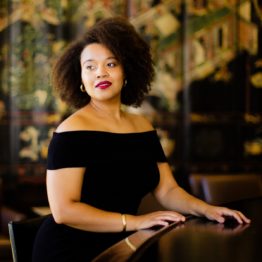
ANGEL BLUE soprano
TAYLOR RAVEN mezzo-soprano
ISSACHAH SAVAGE tenor
SOLOMAN HOWARD bass-baritone
DALLAS SYMPHONY CHORUS – JOSHUA HABERMANN director

BRUCE ADOLPHE Diesen Kuss der ganzen Welt! (This Kiss to the Whole World!) | DALLAS PREMIERE
BEETHOVEN Symphony No. 9, “Choral”

Bruce Adolphe is a composer, educator, performer and author whose “original compositions convey a compelling voice, high craft, authenticity, communicative immediacy and substance” (Gramophone).

Arguably, one of the most quoted pieces of music ever. Beethoven’s final symphony was revolutionary in its use of a full chorus and vocal soloists in the finale. At the point of its conception, Beethoven was completely deaf and experiencing major frustration, loneliness and depression, all expressed in the way the first movement moves from silence to sound.

The riveting scherzo has astounding fugal passages that some feel reflects Beethoven’s daily struggle to communicate with the outside world. The finale uses Schiller’s An die Freude (Ode to Joy) and expresses the humanistic idea that all people of this earth should love one another.

As a whole, the work is an epic summation of all of Beethoven’s genius!


View Program Notes


Make a gift, and double the impact of your support! Thanks to a generous gift from our friends at the David M. Crowley Foundation, all new and increased gifts made by May 31, 2022 will be matched dollar-for-dollar, up to $75,000. Give Now

For information on our COVID-19 safety protocols, please visit here.

FABIO LUISI MUSIC DIRECTOR LOUISE W. & EDMUND J. KAHN MUSIC DIRECTORSHIP

Fabio Luisi

Music Director

Louise W. & Edmund J. Kahn Music Directorship

Read More

Angel Blue

Soprano

Read More

Taylor Raven

Mezzo-Soprano

Read More

Issachah Savage

Tenor

Read More

Soloman Howard

Bass-Baritone

Read More

Dallas Symphony Chorus

Chorus

Read More
JOSHUA HABERMANN CHORUS DIRECTOR JEAN D. WILSON CHAIR

Joshua Habermann

Chorus Director

Jean D. Wilson Chair

Read More

Program Notes

by René Spencer Saller

Even in our hyperpolarized times, Ludwig van Beethoven’s Symphony No. 9 feels like a unifying force across the globe, a cultural common good. The fourth-movement choral setting of a Friedrich Schiller poem—the ultra-hummable “Ode to Joy” melody—has been recycled countless times over the years. It’s the official anthem of the European Union. It pops up in movie soundtracks and television commercials, and huge crowds belt it out before sporting events. Without Beethoven’s immortal earworm, revelers from Japan to Germany would hardly know how to ring in the New Year.

But the price of ubiquity is steep. Monuments get buried under layers of interpretive grime. Something that means so many things—international diplomacy, Enlightenment values, pasteurized cheese product—verges on meaninglessness, becoming an empty signifier, a dead metaphor.

For Beethoven, who drafted, revised and perfected his final symphony over more than 30 years, the meaning was urgent, immediate, vital. He wanted his music to enact a journey of transformation, exploring themes of struggle and salvation, community and compassion. Although he wasn’t religious in the conventional sense, he found spiritual sustenance in his art. In a letter from 1821, a few years before he completed the Ninth Symphony, he explained to his pupil and patron, the Archbishop Rudolph, what composing music meant to him: “There is nothing higher than to approach the Godhead more nearly than other mortals and by means of that contact to spread the rays of the Godhead through the human race.”

Almost 200 years later, Bruce Adolphe refracts some of those Beethovenian Godhead rays in his orchestral response to the “Choral” Symphony. A co-commission of the Dallas Symphony Orchestra and Bravo! Vail, Diesen Kuss der ganzen Welt! revisits Beethoven’s sound world while underscoring his eternal relevance. Maestro Luisi led the DSO in the world premiere at the Bravo! Vail festival last July.

A graduate of The Juilliard School and a native New Yorker, Adolphe has been creating and directing educational programs at the Chamber Music Society of Lincoln Center for the past 30 years. He has taught at Yale University, New York University’s Tisch School of the Arts, and Juilliard’s pre- college division, and he has served as composer in residence at Bravo! Vail, La Jolla SummerFest, Music from Angel Fire, and other major festivals. His compositions have been performed by the Orpheus Chamber Orchestra, Los Angeles Chamber Orchestra and St. Paul Chamber Orchestra, among other leading ensembles. Adolphe has written three books on the topic of musical understanding, and he has lectured widely on multiple platforms.

Diesen Kuss der ganzen Welt! is the latest in his recent series of compositions inspired by specific Beethoven works. Adolphe completed his Fantasia on Beethoven’s Spring Sonata in 2020, and debuted Coiled, which is based on the first movement of the Op. 95 string quartet, in 2019.

The Composer Speaks

“Diesen Kuss der ganzen Welt!” (This Kiss to the Whole World) is a famous line from the “Ode to Joy” by Friedrich Schiller, the text set by Beethoven in his Ninth Symphony. As this work was commissioned specifically to be on the same program with the Ninth, I chose this quote to be both the title and the message: that all humankind is together in this world, we are related, and we should celebrate our humanity with love and joy. In addition to the title, there are several musical connections to Beethoven’s Ninth in this work: the opening tremolo in the violins; the use of recitative-like phrases in the cellos; the shapes of some melodic fragments; the presence of timpani solos.” —Bruce Adolphe

FIRST PERFORMANCE: May 7, 1824 – Vienna
LAST PERFORMANCE BY THE DSO: May 26, 2018;
Jaap van Zweden conducting

“Always keep the whole in mind,” Beethoven liked to say, a maxim that the Ninth exemplifies. Everything leads inexorably to the finale, the apotheosis of the “An die Freude” (Ode to Joy) motif. He was a teenager when he first declared his intention to set Friedrich Schiller’s “An die Freude” to music, in the heady days of the Aufklärung (Enlightenment). In the decades that elapsed before the score was complete, he saw the ideals of the French Revolution trampled by repressive regimes. Resurrecting Schiller’s humanist anthem was a subversive act in 1824, when Austrians could be arrested for saying the word “freedom” or gathering in groups of more than a few unrelated people. Because Beethoven wanted his choral finale to seem like the inevitable outcome of the preceding three movements, he needed to keep his foundational motif in mind from the outset. He wrote the first eight measures of the Freude tune fairly quickly, but he went through dozens of drafts before he figured out a way to finish it. Simplicity is hard.

A Closer Listen

Marked Allegro ma non troppo, un poco maestoso (Cheerful but not excessively and slightly majestic), the first movement begins with a stark open fifth and dissonant tremolos. Out of this void emerges the first faint sign of the Freude theme, inverted here as three descending notes. Just as the universe arose from nothingness, the theme seems to arise, in fits and starts, from a yawning abyss. Set in 2/4 meter, the opening Allegro develops in complex and often unexpected ways. Two keys are dramatically juxtaposed: D minor (the home key, or tonic) and B-flat Major. Throughout we get brief flashes of D Major, foreshadowing the euphoric finale.

The second movement, a scherzo with fugal and sonata-form elements, is also in the home key, at least nominally. Marked “molto vivace,” it combines an anarchic opening (check out that hell-raising timpani!) and a pastoral central interlude, where the key changes to D Major and triple meter shifts to duple. The first notes of the Freude theme return, but they’re tricked out in a different rhythm: another subliminal preview of future pleasures.

Structurally, the ravishing slow movement is a loose adaptation of a theme-and variations form. Beethoven marked it Adagio molto e cantabile, or “very slow and singing,” and the indication reminds us why the Chorus has been standing there patiently all this time, waiting to let loose with the part we’ll be humming as we leave the Meyerson, and possibly for weeks afterward. But Beethoven was the master of deferred gratification. Never mind those brief rebukes from the brass: in this paradise of hushed strings and gentle winds, melodies linger, suspended in bliss.

The choice of key—B-flat Major—signals a break from the tonal tumult, the minor-key chaos of the preceding movements. “Melody,” Beethoven explained in a letter, “must always be given priority above all else.” His sketchbooks suggest that he worked intensively on the Adagio in 1823, hashing out the first theme in several stages; his secondary theme, in 3/4 time, came to him more or less intact.

Even when we know what’s coming, the first moments of the finale are a visceral jolt. Richard Wagner called it a “terror fanfare,” Beethoven biographer Jan Swafford calls it a “brassy burst of fury,” and no matter what you call it, you will flinch when it smacks you at full volume. It’s supposed to hurt a little: a bracing slap to wake you up for the Big Reveal, when the theme bursts loose in a torrent of delirious variations. Never has the transition from minor to major felt more satisfying, more essential. For listeners the ecstasy only mounts, but for singers the finale is downright scary, a brutal tessitura that demands impossibly high notes to be held for an impossibly long time.

As for the rest of it, let’s just skip the usual blather about universal love and the brotherhood of man, those high- minded phrases that we talk about but fail to understand, much less demonstrate. Some killjoys argue that the Ninth is overprogrammed and we’re numb to it now, but if knowing every note by heart were a dealbreaker, Beatles fans wouldn’t exist. It’s not the music but the meanings we’re sick of, all that dreary blah-blah-blah.

“All art constantly aspires towards the condition of music,” Walter Pater famously observed, and the maxim resonates because it seems true. So why do we expect music to do even more? We want it to tell us a story about ourselves, but music tells its own stories, in its own language. If it’s not the Godhead, it’s close enough.

FABIO LUISI conducts
GREGORY RADEN clarinet
TED SOLURI bassoon

EINEM Capriccio
STRAUSS Duett-Concertino for Clarinet and Bassoon with String Orchestra and Harp
BERLIOZ Symphonie Fantastique

Berlioz describes his orchestral tour-de-force, penned when he was only 27, as a portrait of the life of an artist and his unrequited love, conjuring up hallucinatory visions of longing, obsession and the depth of despair all in glorious orchestral sounds.


View Program Notes


For information on our COVID-19 safety protocols, please visit here.

FABIO LUISI MUSIC DIRECTOR LOUISE W. & EDMUND J. KAHN MUSIC DIRECTORSHIP

Fabio Luisi

Music Director

Louise W. & Edmund J. Kahn Music Directorship

Read More
Greg Raden_Principal Clarinet_Mr & Mrs C Thomas May Jr Chair_Dallas Symphony

Gregory Raden

Principal Clarinet

Mr. & Mrs. C. Thomas May, Jr. Chair

Read More
Ted Soluri_Principal Bassoon_Irena H Wadel & Robert I Atha Jr Chair_Dallas Symphony

Ted Soluri

Principal Bassoon

Irene H. Wadel & Robert I. Atha, Jr. Chair

Read More

Program Notes

by René Spencer Saller

This concert features three orchestral works completed at the very beginning and the very end of their composers’ respective careers. Two youthful compositions serve as bookends for a late-life masterpiece.

The Austrian composer Gottfried von Einem was 24 when he started writing his Capriccio for Orchestra, his earliest contribution to the repertoire. The Frenchman Hector Berlioz was a week shy of 27 when he unleashed Symphonie fantastique on an unsuspecting world, upending Classical proprieties in favor of something rich and strange.

The German composer Richard Strauss, for his part, was 83 when he completed his Duet-Concertino for Clarinet and Bassoon, and he wasn’t quite ready to step aside for the next generation—or even the one after that. In his final half-decade of life, the old man was creating some of the finest work of his career. This late-life renaissance produced such gems as the opera Capriccio (1942) and the Duet-Concertino, the last purely orchestral composition in his catalogue.

Strauss is connected to Berlioz in at least one important way: He edited and updated Berlioz’s essential Grand traité d’instrumentation et d’orchestration modernes, usually rendered in English as Treatise on Instrumentation. It’s fair to say that both Berlioz and Strauss literally wrote the book on modern orchestration.

Strauss and Einem were contemporaries and, at least from Einem’s perspective, mortal enemies. Einem called the octogenarian “an opportunist through and through” and, in his capacity as a member of the Salzburg Festival Board of Directors, even banned performances of Strauss’s works. The older composer was outraged by Einem’s baseless animosity, but the feud was cut short in 1949, when Strauss died.

Late in his own life, Einem acknowledged his own combative nature: “I was often quite unbearable, particularly also to my closest friends and partners. Today I regard this not from some lofty perch, not with detachment, but certainly with clarity.”

In December 2002, Yad Vashem, the Israeli Holocaust Memorial Organization, posthumously awarded the Swiss-born Austrian composer Gottfried von Einem a “Righteous Among the Nations” title, the greatest honor that the State of Israel can bestow on a gentile. More specifically, the members of Yad Vashem recognized his brave efforts on behalf of a young Jewish musician named Konrad Latte. Einem hired Latte as a rehearsal assistant for his ballet Princess Turandot; finagled him a ration book and membership in the Reich Musicians’ Chamber; and, perhaps most important, introduced him to other people who were willing to risk their lives to protect him.

Questioning authority came naturally to Einem. In 1950 he advocated for the playwright, poet, and librettist Bertolt Brecht, who was hoping to become a naturalized Austrian citizen. Einem agreed to help Brecht obtain an Austrian passport and commissioned a new piece for the Salzburg Festival. But faced with the fierce opposition of his political and cultural adversaries, who didn’t want a leftist agitator in their midst, Brecht elected to establish residency in East Germany instead. Because Einem had defended a Communist, he was accused of being one himself and labeled a “disgrace for Austria.” In late 1951 he was expelled from the Salzburg Festival Board.

Early Years

Throughout his childhood and adolescence, Einem believed himself to be the biological son of both his parents: his aristocratic mother, Gertha Louise, a scion of the House of Baron Riess von Scheuernschloss, and the man whose surname the family shared, the diplomat William von Einem, who was stationed in Switzerland as a military attaché to the Austrian embassy. At age 20 the composer learned that he was actually the product of an extramarital affair between his freewheeling mother and Count Laszlo Hunyady.

Growing up, Einem felt alienated from his family and social class. “I noticed that the world of sounds was endlessly important to me,” he recalled in his memoir. “By the age of five, I had already articulated my wish to be a composer with complete clarity.”

After graduating from high school in 1937, he continued to pursue his passion for music, cultivating a taste for Wagner and, more subversively, Mahler, whose works were banned by the Nazis. In a stroke of good luck, Einem was declared unfit for his mandatory military service after only two weeks of training. He moved to Berlin to study with Paul Hindemith, but the lessons fell through after Hindemith was targeted for investigation by Joseph Goebbels. Einem would find himself in precisely the same predicament a few years later.

Einem studied with other teachers, and in 1938 began assisting Heinz Tietjen at the Bayreuth Festival. Despite this powerful connection and his family’s close friendship with the Wagner heirs, Einem was arrested and briefly detained by the Gestapo.

A Closer Listen

Lasting between eight-and-a-half and nine minutes, Capriccio is a dynamic divertissement, a strong showpiece for any orchestra swift and responsive enough to follow its quicksilver logic. Exuberant percussion punctuates swoony strings, scampering winds, and voice-of-God brass. Bristling with tempo changes and sharp, syncopated rhythms, the compact orchestral workout demonstrates Einem’s mastery of counterpoint, which he studied extensively with Boris Blacher, his composition teacher, friend, fellow jazz fan, and future librettist.

Strauss, a devoted aesthete, always claimed to be apolitical, but that didn’t stop him from working for the Third Reich. From 1933 to 1935, he served as director of the Reichsmusikkammer. The position—for which he was, to his credit, monumentally unsuited—called for a kind of bureaucratic enforcer, a culture cop purging German music of all non-Aryan elements. He lost the job when he was caught bad-mouthing his Nazi handlers in a letter to his Jewish librettist, a gaffe that no amount of abject backpedaling and groveling could undo.

Like most people, Strauss was neither a monster nor a saint. Unlike Einem, he didn’t act heroically to combat injustice, but he did love his family, and he did try his best to protect those he loved. He was, in the immortal phrase of a favorite philosopher, Human, All Too Human.

He had spent the war years worrying about his Jewish daughter-in-law and grandchildren. Although he was devastated when Allied forces obliterated his beloved opera houses—a real-life Twilight of the Gods scenario—Strauss had long detested the ignorant barbarism of the Third Reich, and above all he craved peace, tolerance, and safety. Even in his grief he clung to his hope for humanity. This scrappy optimism pervades Metamorphosen (1945), his iconic elegy for string orchestra.

Many listeners have claimed to hear a similar spirit of reconciliation in the Duet-Concertino, wherein two seemingly incompatible lead instruments find common ground. Strauss’s immediate reason for writing the double concerto was to fulfill a commission that he had received from Otmar Nussio for the Orchestra della Svizzera Italiana. Strauss also wanted to pay tribute to an old friend, Professor Hugo Burghauser, the former principal bassoonist for the Vienna Philharmonic and the work’s dedicatee.

From Intention to the Airwaves

In 1946 Strauss first wrote Burghauser about his idea: “I am very busy with an idea for a double concerto for clarinet and bassoon, thinking especially of your beautiful tone—nevertheless, apart from a few sketched-out themes, it still remains no more than an intention.”

About a year later, the intention was fully realized. He finished the Duet-Concertino while living in Switzerland, where he had moved after the war to avoid testifying in the denazification proceedings. This was a period of severe financial hardship for the composer because his assets were frozen until his own legal status was resolved. He was cleared in 1948, the same year that the Duet-Concertino debuted. The world premiere was broadcast on Radio Lugano on April 4, 1948, under Nussio’s baton. Strauss didn’t attend the live performance, but he may have tuned in to the radio broadcast. In 1949 he returned to Germany, where he would die within the year.

Although Strauss didn’t include a written program for the Duet-Concertino, he did have a specific story in mind—or, more accurately, a few similar stories. He told Burghauser that he based the double concerto on the French fairy tale Beauty and the Beast. He also told the bassoonist that he imagined a scene in which a graceful princess meets a clumsy bear, whose “grotesque cavorting” alarms her at first but eventually wins her over. Strauss told the conductor Clemens Krauss that the Duet-Concertino was inspired by the Hans Christian Andersen tale “The Swineherd,” wherein a prince disguises himself as a humble pig-tender to earn the love of a princess. Regardless of the chosen narrative, the clarinet always plays the princess and the bassoon always plays the lowly suitor.

A Closer Listen

The Duet-Concertino is scored in the style of the Baroque-era concerto grosso. Although Strauss used the standard orchestral setup of strings and harp, he divided the string section into five parts, consisting of performers designated soli (soloists, or the lead players for each of the five sections) and tutti (all other members of each section). The opening bars showcase each of the five soloists, joined by a second viola.

The Duet-Concertino is structured in three movements: Allegro moderato, Andante, and a rondo marked Allegro ma non troppo. The outer movements are more substantial, with the central Andante functioning more as a transitional intermezzo than a traditional slow movement. The supple, long-breathed clarinet dominates the lyrical, quasi-Mozartian opening section, which introduces the princess. Strauss suggests the clumsiness of her improbable beau by using a different time signature for the solo bassoon. Try as he might, the bear (or beast, or swineherd, depending on your preferred origin story) can’t seem to match step with his beloved. The Andante begins with a tender bassoon soliloquy, in which the aspiring lover reveals his inner nobility and manages to win the princess’s heart. After the clarinet and bassoon exchange motifs, they weave all the various themes into a spirited, dance-based rondo, the last and longest of the three movements.

With Berlioz, there was always a new passion: a new woman to stalk, a new polemic to publish, a new musical project to launch. His obsession with Harriet Smithson was all that to the infinite power. On September 11, 1827, the Irish-born actress played Ophelia in a performance of Hamlet that the composer attended. The double-whammy of Smithson and Shakespeare hit him hard, in what the French call a coup de foudre, and everything changed forever.

His love for Shakespeare was chronic and benign. His love for Smithson raged on for several years—never mind that he spoke very little English, she barely any French; never mind that he was, at least at the beginning of the affair, engaged to marry another woman (a woman whom he later plotted to murder, along with her mother and fiancé, but that’s another story). After enduring the sort of courtship that would instigate a restraining order today, Smithson married Berlioz. Ruin and sorrow ensued.

Although Berlioz didn’t invent musical Romanticism, no one was a better figurehead for its wild early days. His scandalous personal life, his groundbreaking sonic experiments, and his inflammatory music reviews changed the course of 19th-century culture. His Symphonie fantastique stands as one of the most influential symphonic works in music history.

Long Strange Trip

In 1969, during one of his Young People’s Concerts, the conductor Leonard Bernstein called Symphonie Fantastique “the first psychedelic symphony in history.” Summarizing its story line, he quipped, “Berlioz tells it like it is. You take a trip, you wind up screaming at your own funeral.”

Hippie jive aside, Bernstein was essentially paraphrasing the composer’s own program notes, which Berlioz maintained were indispensable for a complete understanding of his work. Earlier symphonies—such as Beethoven’s Sixth Symphony (Pastorale), a major influence on Symphonie Fantastique—depicted landscapes and moods, but none told a story so explicitly, with particular melodies and sound effects lining up with specific characters and plot points. Symphonie fantastique is an opera without singers.

Today we recognize Berlioz’s symphonic debut as the archetypal program symphony—music that describes characters, events, and emotions, as opposed to absolute music, which is, at least theoretically, nonrepresentational—but audience members at the 1830 Paris premiere were unprepared for such detailed notes, especially on such a sordid topic.

Here’s the synopsis: A sensitive young artist (obviously Berlioz) falls desperately in love with a total stranger (obviously Harriet Smithson); attempts to poison himself with opium; but instead has a nightmare about murdering his beloved, being condemned to death by guillotine, witnessing his own execution, and attending his own funeral in the company of ghouls, witches, and devils.

Shock value aside, Symphonie fantastique is a singular achievement. It embodied a new art form, a synthesis of music, literature, drama, and autobiography. Richard Wagner, 10 years younger than Berlioz, tweaked this concept, called it the Gesamtkunstwerk (“total work of art”), and made it his life’s mission. Berlioz’s oft-mentioned idée fixe—the recurrent melody that serves as his Smithson proxy and unifies the symphony’s five movements—predated the Wagnerian leitmotif, too. His daring harmonies and strange instrumental sonorities (the final movement’s col legno bowing, which sounds like rattling skeletons, for example) anticipated similar sound experiments by 20th-century avant-gardistes.

A Closer Listen

The first movement, a bipolar fantasy, subverts sonata form. The second movement, a decorous waltz, contrasts a ballroom party (two harps: swanky!) with the hero’s interior torment; before long, the objective and subjective realms collide in dazzling polyphony. In the third movement a pastoral call-and-response duet between two shepherds (listen for the off-stage oboe and on-stage English horn) dramatizes the artist’s isolation and despair. In the fourth movement, the artist takes the opium that triggers his horrific nightmare.

In his program notes Berlioz wrote, “The procession moves forward to the sounds of a march now somber and ferocious, now brilliant and stately…. At the end of the march, the first four measures of the idée fixe reappear like a last thought of love interrupted by the fatal blow.”

In other words, he remembers the woman he killed, and kerplunk! goes his head. When the beloved’s theme, once “noble and shy,” returns in the finale, it has devolved into a vulgar jig voiced by a shrill clarinet. Before the movement ends, witches enact a burlesque parody of the medieval plainchant Dies irae from the Requiem mass. With that bold move, Berlioz kick-starts Romanticism and accidentally invents black metal.

The Dallas Symphony Orchestra has Russian composers programmed throughout the 2021/22 season, which was planned in 2020. We believe that these works should continue to be performed; the pieces come from all times in history, from the Czarist age to the authoritarian regime of Stalin. Many of these composers, who are integral to the classical music canon, wrote works in reaction to the oppression and violence of their time living in or being forced to leave the Soviet Union or Russia. These works are reflections of universal human emotions that touch us all. To remove these compositions from the programming is to silence their voices based on tragic events in the contemporary world. Musicians use their art to respond to or transcend politics and reminds us that art has the power to eliminate boundaries and connect us to each other.

FABIO LUISI conducts
ETIENNE DUPUIS baritone (Eugene Onegin)
NICOLE CAR soprano (Tatyana)
PAVOL BRESLIK tenor (Lensky)
BRINDLEY SHERRATT bass (Prince Gremin)
MELODY WILSON mezzo-soprano (Olga)
ALEXIS GALIDO mezzo-soprano (Larina)
CLAUDIA CHAPA mezzo-soprano (Filipyevna)
KEITH JAMESON tenor (Triquet)
ALLEN MICHAEL JONES bass
WILL HUGHES bass-baritone
DANIEL NORWOOD tenor
DALLAS SYMPHONY CHORUS – JOSHUA HABERMANN director

ALBERTO TRIOLA stage director
CAYLEY CARROLL assistant to stage director
YULIA LEVIN repetiteur & rehearsal pianist
JESSICA DRAYTON lighting designer
DIANA CROWDER dance director
KIERA MAYS dancer
COURTLYN HANSON dancer
CARRIE RUTH TRUMBO dancer
KYRA MCGUIRK dancer
ADAM WALLMAN
dancer
ROBERTO REYNA
dancer
ADAM KULLMAN
dancer

TCHAIKOVSKY Eugene Onegin | OPERA-IN-CONCERT – SUNG IN RUSSIAN WITH ENGLISH SURTITLES
Act I, 72 minutes | Act II, 41 minutes | Act III, 35 minutes (approximate durations)

Partake in Fabio Luisi’s mastery of opera and a stellar cast of handpicked soloists in Tchaikovsky’s Eugene Onegin, a Russian lyric opera filled with celebratory tunes, an infectious waltz, passion-soaked arias, plush orchestration and even a dramatic pistol duel.

Based on the poetry of Pushkin, the story is about two friends who fall into a jealous argument at a dance over the young and beautiful Tatyana, ultimately challenging each other to a duel. Onegin is victorious, but runs into Tatyana years later and discovers that she has married Prince Gremin.

Onegin writes Tatyana a love letter and demands a meeting, at which Tatyana acknowledges the reciprocal love but ultimately chooses to honor her promise to Gremin. She flees the stage in tears and Onegin is left alone.


View Program Notes


For information on our COVID-19 safety protocols, please visit here.

FABIO LUISI MUSIC DIRECTOR LOUISE W. & EDMUND J. KAHN MUSIC DIRECTORSHIP

Fabio Luisi

Music Director

Louise W. & Edmund J. Kahn Music Directorship

Read More
Etienne Dupuis

Etienne Dupuis

Baritone

Read More

Nicole Car

Soprano

Read More

Pavol Breslik

Tenor

Read More

Brindley Sherratt

Bass

Read More
Melody Wilson

Melody Wilson

Mezzo-Soprano

Read More
Alexis Galindo

Alexis Galindo

Mezzo-Soprano

Read More
Claudia Chapa

Claudia Chapa

Mezzo-Soprano

Read More

Keith Jameson

Tenor

Read More
Allen Michael Jones

Allen Michael Jones

Bass

Read More
Will Hughes

Will Hughes

Baritone

Read More
Daniel Norwood

Daniel Norwood

Tenor

Read More

Dallas Symphony Chorus

Chorus

Read More
JOSHUA HABERMANN CHORUS DIRECTOR JEAN D. WILSON CHAIR

Joshua Habermann

Chorus Director

Jean D. Wilson Chair

Read More
Alberto Triola

Alberto Triola

Stage Director

Read More

Program Notes

by René Spencer Saller

When Tchaikovsky began his fifth opera, Eugene Onegin, he was mired in a melodrama of his own making. On June 1, 1877, he visited Antonina Milyukova for the first time. She was a student at the Moscow Conservatory, where he had been teaching for the past decade. Although Milyukova barely knew Tchaikovsky, she had been sending him increasingly deranged love letters, threatening suicide if her affections were not returned. Instead of backing away and delegating the problem to someone more qualified to help her, Tchaikovsky responded like an eager suitor. He was moved by the similarity between her hopeless passion and that of Pushkin’s tragic heroine Tatiana, whose decision to declare her love in a letter to a virtual stranger in Eugene Onegin sets off a life-changing chain of events. Tchaikovsky had been considering Pushkin’s classic novel as the source for his next opera for about a month, after his friend the singer Yelizaveta Lavrovskaya suggested it to him. Now it seemed like fate.

With the Pushkin plot still percolating in his mind, Tchaikovsky, a deeply conflicted and self-loathing homosexual, came up with a truly disastrous idea. He proposed marriage to his unstable young admirer, just two days after meeting her. The wedding took place that July. Two months later, he waded out into the ice-clogged Moscow River and tried to drown himself.

With the help of his younger brother and a St. Petersburg psychiatrist, the composer recovered from his nervous breakdown and his brief but traumatic marriage to Milyukova. Over the next eight months, while convalescing in Switzerland and Italy, he wrote and revised Eugene Onegin. His fortunes continued to improve: Nadezdha von Meck, his generous new patron, promised him an annual stipend that would allow him to resign from the Conservatory. For the next 14 years, until von Meck abruptly cut off her generous subsidy, Tchaikovsky was free of his day job and able to devote all his mental energy to composition. He came to consider the enigmatic widow his best friend. The pair exchanged hundreds of remarkably intimate letters without ever meeting in person.

In May 1877 Tchaikovsky wrote to his brother Modest: “How glad I am to be rid of Egyptian princesses, pharaohs, poisonings, and stilted effects of all kinds. What a mine of poetry there is in Onegin.” He finished the opera by January 1878, and revised it in March 1879, October 1880, August 1885, and June–July 1891.

Pushkin’s Plot, via Tchaikovsky

Instead of recounting Pushkin’s story in a continuous, or linear, way, Tchaikovsky’s version of the plot is episodic: the opera dramatizes a few pivotal moments from Onegin’s and Tatiana’s lives. Tchaikovsky adapted the libretto himself, with some assistance from his brother Modest and the poet Konstantin Shilovsky, who helped develop the initial scenario. Several chunks of the libretto are extracted verbatim from Pushkin’s verse-novel.

The composer described the opera as a series of “lyrical scenes in three acts and seven tableaux.” Act II begins some months after Act I concluded; Act III picks up some five years after the end of Act II. Life happens in the interstices, the junctures between then and now. As the characters mature, the power dynamic shifts from jaded heartbreaker-dandy Eugene Onegin to ingenue-turned-grande dame Tatiana: the girl he once thoughtlessly spurned, transformed into the woman he realizes—too late!—is his one true love.

Act I

When we first meet Tanya, the soprano heroine, she’s reading a book and waxing capital-R Romantic (“Have you not heard?”). Her mother, the widowed Madame Larina, reminds her that life is not a pretty story. She and the girls’ nurse, Fillipyevna, reminisce about their youth and remind themselves, not entirely convincingly, that habit is a good proxy for happiness. Olga, her flirtatious, fun-loving little sister, offers a simpler option: be happy and enjoy life in the moment (“Ah, Tanya, Tanya”). All this happens before Tatiana meets her disaffected neighbor, Eugene Onegin, who reminds her of a hero in one of her romances. And just like a heroine in one of her romances, she falls in love at first sight. Her family members tease her for being a sentimental poetess addicted to suffering, but she longs for love, and recognizes it as soon as she feels it. She writes an ardent letter to Onegin (“Let me die, but first”) and pleads with fond old Fillipyevna to find someone to deliver it to him. Tchaikovsky used much of Pushkin’s poetry verbatim in long passages of the “Letter” scene, which contains some of his most enduring melodies.

After receiving the love letter, Onegin devastates the young virgin by turning her down, using the tried-and-true “it’s not you, it’s me” line prevalent among dissolute bachelors and literary cads (“Were I a man whom fate intended…”). He offers to be a brother to her—perhaps a bit more than a brother—but warns her to be more discreet when addressing eligible bachelors, since less scrupulous men might take advantage of her sincere and giving nature. Slut-shaming, 19th-century style, and Onegin has the gall to get all sanctimonious about it! Tatiana is heartbroken and humiliated.

Act II

Act II takes place at Tatiana’s Name Day ball. Onegin, dragged there by Lensky, dances with Tatiana. His mood sours when he overhears the other guests gossiping and sizing them up as a couple. To punish Lensky for bringing him to the ball, Onegin flirts with Lensky’s intended, Tatiana’s heedless and hedonistic little sister Olga, the contralto on whom Tchaikovsky lavishes some of his most lustrous, honey-glazed secondary arias. This rash act of retaliatory flirting leads to a pointless rivalry that culminates in Onegin killing his best friend—the passionate poet Lensky—in a duel. Before he dies, Lensky delivers a perfect valedictory aria, the bittersweet “Kuda, kuda” (“O where have you gone, o golden days of my spring”), his meditation on youth and its ephemeral passions. Then he dies in a duel that he fully acknowledges is ridiculous. Lensky must die because Lensky and Onegin are both stubborn cowards who refuse to back down, apologize, or give up the claims of honor.

Before you scoff at the idiocy of dying in a duel over a woman’s reputation, remember that in 1837, about five years after the last installment of Eugene Onegin was published, Pushkin himself died in a duel, for a similarly asinine reason (his glamorous young wife’s supposed virtue).

Lensky, the lyrical tenor and source of the most unabashedly romantic and Italianate love arias, dies, alone—insufficiently mourned by the faithless Olga, who never appears onstage again. Onegin, the supposed victor, only grows sadder and more nihilistic.

Act III

About five years have passed. Onegin finds himself out of sorts at a fancy banquet. His acquaintance Prince Gremin, it turns out, is now married to a beautiful woman whom he adores unreservedly: Tatiana. It’s entirely to Tchaikovsky’s credit that he gives one of the finest and most memorable arias to Prince Gremin, the antihero hero’s romantic nemesis (“All men surrender to Love’s power”). In another kind of opera, Prince Gremin would be a cuckold for certain, but in this one, the loyal husband prevails.

In their final duet together, Onegin realizes that he is in love with Tatiana, and not, as she suggests, simply drawn to her improved social status. He has always loved her, he realizes, suddenly but too late. He begs her to run away with him. Although Tatiana can’t deny that she still harbors strong feelings for her former neighbor and first love, she prefers to stay true to her faithful husband, the prince, and bids Onegin farewell forever. Does she doom him to eternal torment? As far as he is concerned, yes. Tchaikovsky ends the opera there, with Onegin marinating in his misery.

But at least half of the audience sides with the women and the lovers. The songs we love best are the romantic arias from Lensky and Gremin; young Tanya’s love letter, a rhapsodic outburst of virginal desire; her dusky-throated younger sister Olga’s supple appeal to pleasure and laughter; Madame Larina’s and Filippyevna’s bittersweet memories of their courtship days.

The spurned girl gets both men in the end: the one who broke her heart, and the one she married. Tanya has learned to love the one she’s with, and it certainly doesn’t hurt that he is also a prince and a war hero. Has she become her mother, substituting habit for happiness? No, she has simply grown up and gotten smart enough to love the man who loves her instead of the man who rejected and humiliated her, the condescending and oblivious Eugene Onegin of Acts I and II. Onegin’s tragedy is that he discovers the love of his life too late, after two acts’ worth of unthinking cruelty. By the time he figures out what he wants, in Act III, it’s too late.

Alexander Pushkin (1799–1837)

Like a Slavic Shakespeare, Alexander Pushkin exerts an outsize influence over Russian culture. His gifts to the writers who followed him are vast and incalculable. All the greatest Russian composers mined his texts for source material. He was prolific during his brief lifetime, and his substantial body of work contains examples of every major genre that existed in his day: novels, short stories, lyric poems, narrative poems, plays, critical essays, and letters.

Everything Pushkin wrote bore his distinctive, immediately recognizable style. Even Vladimir Nabokov, the consummate technician, the Russian prose stylist’s stylist, despaired of translating Pushkin’s intricately rhymed stanzas. The scheme Pushkin deploys for Eugene Onegin, the so-called Onegin stanza, or Pushkin sonnet, calls for strict tetrameter, with four stressed syllables per line. The rhyme scheme is equally rigorous, alternating pairs of masculine and feminine rhymes.

Although the original Eugene Onegin amounts to a scant 100 pages or so, Pushkin saturated every line with allusion and nuance. For his magisterial 1964 translation, Nabokov needed two full volumes of text to convey Pushkin’s meaning in English. Ultimately, Nabokov chose to render Pushkin’s poetry as prose because he believed that replicating the complex meter and rhyme schemes would be impossible.

Nabokov’s poem On Translating Eugene Onegin opens with a rueful acknowledgment that his task amounts to a desecration:

“What is translation? On a platter
A poet’s pale and glaring head,
A parrot’s screech, a monkey’s chatter,
And profanation of the dead.”

Born into the Russian nobility, Pushkin was reared mostly by nursemaids and spoke French at home until age 10. He learned Russian from the serfs on the family estate and from his nanny, to whom he remained extremely close. After publishing his first poem at 15, he became a rising star of the St. Petersburg literary scene.

Constantly clashing with the tsarist regime, Pushkin lived in Crete and the Crimea and joined an underground political group fighting for Greek independence from Ottoman rule. His Freemason status, libertine ways, and radical politics put him at odds with his overlords, and in 1820 he was exiled to a remote southern province, where he launched his “southern cycle” of romantic poems. He also started writing Eugene Onegin, which he would publish in installments between 1825 and 1832.  He would later call it his favorite among all his works.

After being pardoned by the newly installed Tsar Nicholas I in 1826, Pushkin returned to Moscow, where he met the 16-year-old socialite Natalya Goncharova, already famous for her beauty. They married in 1831 and moved to St. Petersburg, where Natalya gave birth to four children and Pushkin wrote books and got into feuds. The couple remained unhappily married for about six years, until Pushkin was shot and killed in a duel by the dashing Frenchman with whom Natalya was rumored to be having an affair and who also happened to be her brother-in-law. By that point in his life, the pugnacious poet had engaged in dozens of duels, but this would be his last.

Conversely, Natalya’s luck improved. She went on to marry a nobleman in 1844 and bear three more daughters. She may have engaged in a discreet affair with Nicholas I. She died in 1863, of natural causes.

The Composer Speaks

In a letter dated January 1878 Tchaikovsky wrote:

“I wrote this opera because one fine day I felt an inexpressible urge to set to music everything in Onegin that is just asking to be turned into music. I did this as best as I could. I worked on the opera with an indescribable enthusiasm and pleasure, not worrying too much as to whether it had action, effects, etc.

“[…] I need people, not puppets; I would gladly tackle any opera [subject] in which, even if it did not have any powerful and unexpected effects, I should find beings like me, experiencing emotions which I too have experienced and can understand […] I am looking for an intimate but powerful drama, based on a conflict of situations which I have experienced or witnessed myself, and which are able to touch me to the quick.”

“[…] I wrote it because I was obeying an irresistible inner attraction. I assure you that it is only under this condition that one should write operas. As for thinking about effects and worrying about how it will work on the stage, that is only necessary to a certain degree. Otherwise, what you’ll get is something effective, entertaining, perhaps even beautiful and interesting, but not fascinating, not actually alive.”