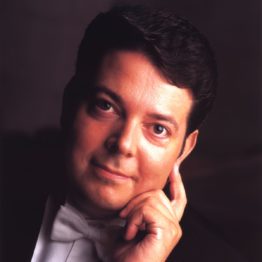
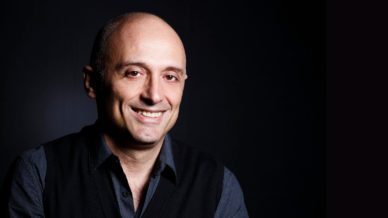
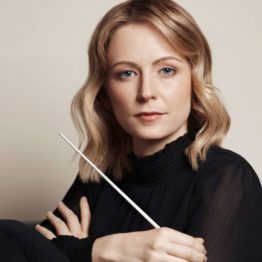
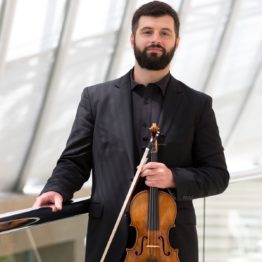
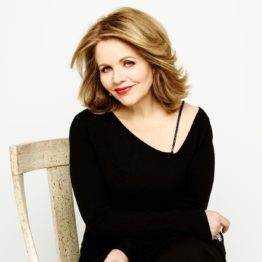
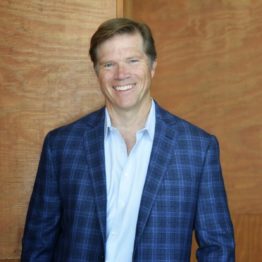
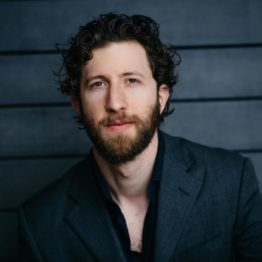
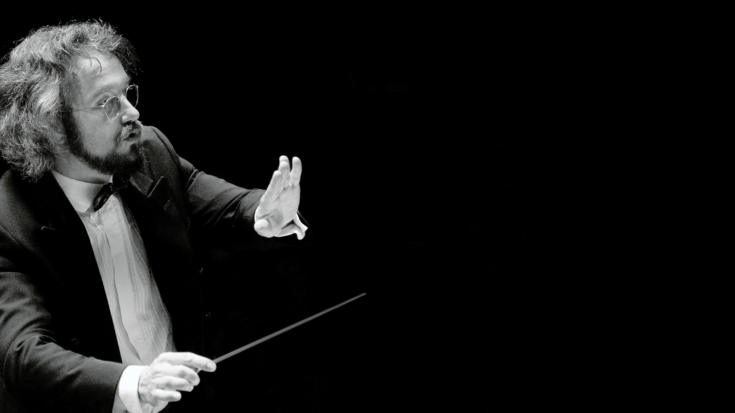
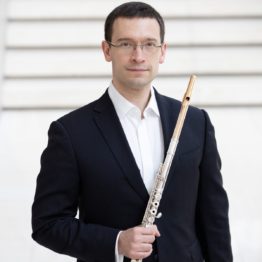
BERNARD LABADIE conducts
BENEDETTO LUPO piano

MOZART Chaconne from Idomeneo
MOZART Piano Concerto No. 23
MOZART Symphony No. 41, “Jupiter”

Widely regarded as one of the leading interpreters of Mozart, Canadian conductor Bernard Labadie leads an All-Mozart program, starting with the final coronation dance (Chaconne) from the composer’s breakthrough opera Idomeneo.

Italian pianist and winner of the Eighth Van Cliburn International Piano Competition, Benedetto Lupo performs Mozart’s intimate A Major Piano Concerto, engaging the listener with a sunny disposition of poignancy and serenity.

Mozart’s monumental “Jupiter” symphony – aptly named for the king of the gods – is his largest and is at once exuberant and introspective, charming and complicated.


View Program Notes


For information on our COVID-19 safety protocols, please visit here.

Bernard Labadie

Conductor

Read More

Benedetto Lupo

Piano

Read More

Program Notes

by René Spencer Saller

Even though he died at age 35, Mozart managed to compose 41 symphonies and 27 piano concertos, not to mention music in virtually every other genre that existed during his brief life. Above all, he longed to be a successful opera composer. When the Salzburg native composed his tenth opera Idomeneo, Re di Creta, in late 1780 and early 1781, he was 25 years old and closing in on two decades of professional experience as a musician. But he still hadn’t found his true voice in opera: Idomeneo, his first fully mature effort, was about to change that. To prepare for its premiere, which would take place at the Residenztheater on January 29, he traveled to Munich alone, without a parent to chaperone him, the first such trip he had taken in his life.

His growing independence might account for the boldness in his breakthrough opera. The court musicians of Munich were talented and meticulous, and Mozart took full advantage of their abilities with his virtuosic scoring, particularly for the winds and brass (pairs of flutes, oboes, bassoons, horns, and trumpets). The opening performances of Idomeneo were successful, but Mozart had his heart set on relocating to Vienna, the apex of his operatic ambitions. His greatest glories were still ahead, to be fulfilled in the last decade of his life.

The chaplain, musician, and poet Giovanni Battista Varesco (also known as Giambattista Varesco and Girolamo Giovanni Battista) wrote the libretto for Idomeneo after a similar French play. The plot concerns the titular character, the King of Crete, who makes a rash sacrificial vow to Neptune during a harrowing storm at sea. But this isn’t a tragedy, and—spoiler alert! —Idomeneo’s beloved son isn’t killed at the end. In typical opera seria fashion, Idomeneo concludes with an elaborately choreographed ballet to celebrate triumph over catastrophe.

The festive closing music includes the sprightly, elegant chaconne performed here. The origins of the chaconne are still somewhat disputed, but it likely engaged from an ancient ceremonial court dance from Mexico, by way of Spain, Italy and finally France. Although the form of a chaconne (and its close cousin the passacaglia) typically calls for a set of variations over a repeated bass figure or harmonic accompanying pattern, this contrast-rich piece assumes more of a fast-slow-fast, rondo-like structure. Mozart adapts his main theme from Christoph Gluck’s Iphigénie en Aulide (1774).

Mozart’s Piano Concerto No. 23 reminds us that the best epiphanies happen not when our expectations are met but when they’re met in previously unimagined ways. This concerto delivers beauty in all of its jolting weirdness: the moment we hear the dissonance as sweet and sour and unreasonably delicious; the instant we let strangeness snake its way into the familiar and swallow it whole.

By March of 1786, when Mozart completed his Piano Concerto No. 23, he was the undisputed master of such satisfying surprises. Never merely pretty, the Concerto in A Major gratifies only to gobsmack. The light-spangled simplicity of a few plinked notes sends us hurtling into a kaleidoscopic fugue. An unassuming melody turns richly contrapuntal, only to unravel before our ears. We smile with delight, then gape in mute astonishment.

Since early childhood, when he toured the continent as a keyboard and violin prodigy, and throughout his teens and early adulthood, when he joined his father as a court musician, Mozart had been a dutiful son. But in 1781, at age 25, he defied his father and left Salzburg for Vienna, the nexus of musical culture for German speakers. Although he dreamed of writing operas, he focused at first on his more profitable career as a pianist-composer. This was mostly by necessity; he was chronically broke. But luckily, he was very prolific. Between 1784, the year he began Piano Concerto No. 23, and 1786, the year he finished it, he cranked out a dozen piano concertos, all more or less magnificent.

A Closer Listen

Although it’s certainly tricky and taxing, Piano Concerto No. 23 is more than a virtuoso showpiece. The soloist must be an accompanist, too: a chamber musician, the closest of close listeners. The intimacy is heightened by the substitution of clarinets for oboes and the absence of trumpets and drums in the score.

The opening Allegro, in A Major, begins with a radiant tutti that generates two main thematic ideas: the first cheery, the second a delicate downward sigh. Taking up both themes by turn, the piano reimagines them and reveals new melodic angles. Traces of F-sharp minor emerge, hinting at the upcoming slow movement. Fluttering figuration and Bach-like counterpoint lead to a stunning cadenza, which Mozart, contrary to his usual custom, fully transcribed.

The central Adagio begins with a devastatingly fragile piano melody, which the strings somberly repeat. Unusually for Mozart, it’s in F-sharp minor, the only instance when he used it as the main key of a movement. Flute and bassoon conspire in a bit of brightness, but the piano refuses to be consoled. As the Adagio ends, the piano perseverates on a single note against pizzicato strings: sorrow exalted to silence.

Puncturing the quiet, the Allegro assai erupts in a delirious rondo, returning to the home key and the brilliant back-and-forth of the orchestra and solo piano.

No one knows exactly who came up with the “Jupiter” nickname for Mozart’s final symphony, but it wasn’t the composer himself. At any rate, the Roman god is a decent avatar for Symphony No. 41 (K. 551). Who else could represent Mozart’s magisterial four-movement symphony in C Major but the ruler of thunder, the king of the gods, the divine diplomat?

Miraculously, Mozart managed to complete his last three symphonies in June, July, and August of 1788. The recent publication of Haydn’s “Paris” symphonies—three of which are in the same keys that Mozart chose for Symphonies 39 through 41—might have given him the idea. Mostly, though, the cash-strapped composer needed some new material to perform, and he hoped that a fresh batch of symphonies might entice potential clients in London.

Obviously, Mozart had no idea that he’d be dead in three years, or that he’d never write Symphony No. 42. That inconvenient detail doesn’t stop people from interpreting the final symphony as some kind of conscious, career-culminating farewell. But Mozart was far more interested in musical juxtaposition than in self-expression, and Symphony 41 is in many ways an opposing response to its immediate predecessor, in G minor. The English musicologist Julian Rushton called them “twins of opposite character.”

A Closer Listen

As with the Figaro overture, the Allegro vivace immediately announces its intention: to mix things up. Martial pomp collides with lyrical sweetness. Violent storms subside in opera buffa whimsy. Mozart quotes one of his own recent arias, hilariously out of context, and subverts fusty high art–versus–low art conventions by subjecting the little ditty to some serious counterpoint.

In the Andante cantabile, low strings caress a dulcet clarinet motive, while the violins croon a sumptuous countermelody. Richly expressive, with long singing lines, the slow movement has the quality of an aria (the tempo indication means “songlike and flowing”). Next, a hint of the contrapuntal grandeur to come: a graceful minuet weaves together interlocking melodies based on a theme from the first movement.

The finale, marked Molto allegro, starts with a four-note motif that Mozart (and others) had used before, but it’s only a means to an end: even more extreme counterpoint. Here Mozart combines conventional Classical sonata form with fugue, a high Baroque procedure that fascinated him; he pored over (and occasionally filched) similar fugato-style passages in scores by Michael and Joseph Haydn. The monumental coda melds together five distinct motifs, the primary one derived from the earlier four-note plainchant melody.

Thursday, February 3rd Performance Cancelled
Unfortunately, due to inclement weather conditions in Dallas and the impact on travel, we are cancelling tonight’s concert. You may exchange your tickets for a future concert, including the Friday or Saturday performance of Welcome Back Maestro Litton, donate your tickets or request a refund by logging in to your account here.

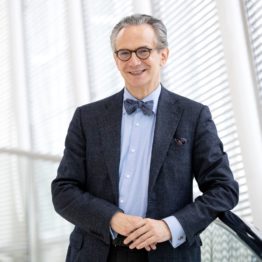
ANDREW LITTON conducts
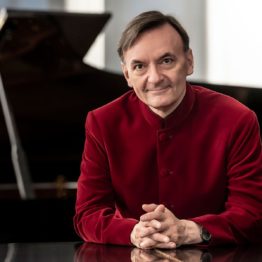
STEPHEN HOUGH piano

TCHAIKOVSKY Piano Concerto No. 1
RACHMANINOFF Symphony No. 2

Former DSO Music Director Andrew Litton and pianist Stephen Hough, who recorded the entire series of the Rachmaninoff Piano Concertos with the DSO, reunite at the Meyerson this season. Maestro Litton (DSO Music Director 1994-2006) conducts Rachmaninoff’s Second Symphony, a romantic orchestral juggernaut containing suspenseful melodic lyricism, a vibrant-scherzo, tear-jerking slow movement and a festive finale of epic proportion.

We open the performance of All-Russian repertoire with pianist Stephen Hough, who “can power through man-eating Liszt and Tchaikovsky concerti with the best of them, but for Hough, God is mostly in the details – the beautifully articulated inner voices, the crystalline clarity of lyrical passages, the precision of the pedal … he radiates a higher sense of purpose.” – Vanity Fair


The Dallas Symphony is grateful for the wonderful support of its donors and patrons. For a full list of Donor Appreciation Month opportunities, please visit here.


COVID-19 SAFETY PROTOCOL
Your safety, and the safety of our musicians, guest artists and staff continue to be our top priorities. We are currently requiring proof of vaccination or a negative PCR test within 48 hours of your performance date, and masks are required at all times in the Morton H. Meyerson Symphony Center, regardless of vaccination status. For more information on our enhanced safety protocols, please visit here.
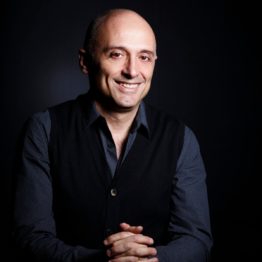
Andrew Litton

Conductor

Read More

Stephen Hough

Piano

Read More

FABIO LUISI conducts
JAMES EHNES violin

ELGAR Violin Concerto
ADOLPHUS HAILSTORK Epitaph for a Man who Dreamed
SCHUMANN Symphony No. 1, “Spring”

In 1905, the famed Austrian violinist Fritz Kreisler told the Hereford Times “If you want to know whom I consider to be the greatest living composer, I say without hesitation, Elgar. I wish Elgar would write something for the violin. He could do so, and it would certainly be something effective.” Five years later Elgar delivered Kreisler a concerto by turns grand, brooding and heroic.

American composer Adolphus Hailstork’s Epitaph for a Man Who Dreamed is a solemn orchestral homage to the life of Martin Luther King, Jr. Inspired by the pastoral poetry of Adolf Böttger, Schumann’s First Symphony brims with spirited melodies and fanfares to depict “Spring’s Awakening”.

COVID-19 SAFETY PROTOCOL
Your safety, and the safety of our musicians, guest artists and staff continue to be our top priorities. We are currently requiring proof of vaccination or a negative PCR test within 48 hours of your performance date, and masks are required at all times in the Morton H. Meyerson Symphony Center, regardless of vaccination status. For more information on our enhanced safety protocols, please visit here.

FABIO LUISI MUSIC DIRECTOR LOUISE W. & EDMUND J. KAHN MUSIC DIRECTORSHIP

Fabio Luisi

Music Director

Louise W. & Edmund J. Kahn Music Directorship

Read More

James Ehnes

Violin

Read More

GEMMA NEW conducts
NATHAN OLSON violin

DEBUSSY Printemps (Spring)
BARTÓK Violin Concerto No. 1
BEETHOVEN Symphony No. 6, “Pastoral”

Experience nature and love through music during this concert. Debussy’s sublime suite uses musical impressionism to evoke the gradual blossoming and eventual birth of nature in springtime.

Bartók’s ‘lost’ work is an idealization of his true love for violinist Stefi Geyer and is filled with infectious melodies and jagged rhythms that would showcase her virtuosic talents.

Beethoven composed his Sixth Symphony, a programmatic work that uses the many colors of the orchestra to tell a pastoral story, complete with babbling brooks, bird calls, a turbulent storm and a merry gathering.

Gemma New

Gemma New

Former DSO Principal Guest Conductor

Dolores G. & Lawrence S. Barzune, M.D. Chair

Read More
Nathan Olson_Co-Concertmaster_Violin I_Fanchon & Howard Hallam Chair_Dallas Symphony

Nathan Olson

Co-concertmaster

Fanchon & Howard Hallam Chair

Read More

FABIO LUISI conducts
RENÉE FLEMING soprano
ROD GILFRY baritone
WENDALL HARRINGTON video

R. STRAUSS Metamorphosen
KEVIN PUTS The Brightness Of Light | DALLAS PREMIERE

This exceptional weekend of music includes the Dallas Premiere of Pulitzer Prize-winner Kevin Puts’s The Brightness of Light. This impassioned multi-media journey, inspired by letters of the iconic American artist Georgia O’Keeffe to her husband and accomplished photographer Alfred Stieglitz, paints a magnificent musical portrait of life in the American Southwest and features star soprano Renée Fleming and baritone Rod Gilfry.

This program, led by Fabio Luisi, also includes Strauss’s achingly beautiful Metamorphosen. A devastatingly personal rumination on the destruction of his beloved Munich, this memorial to a shattered culture will linger with listeners long after leaving the hall. 

FABIO LUISI MUSIC DIRECTOR LOUISE W. & EDMUND J. KAHN MUSIC DIRECTORSHIP

Fabio Luisi

Music Director

Louise W. & Edmund J. Kahn Music Directorship

Read More

Renée Fleming

Soprano

Read More

Rod Gilfry

Baritone

Read More

FABIO LUISI conducts
KIM-LILLIAN STREBEL soprano
KELLEY O’CONNOR mezzo-soprano
SPENCER LANG tenor
DAVID LEIGH bass
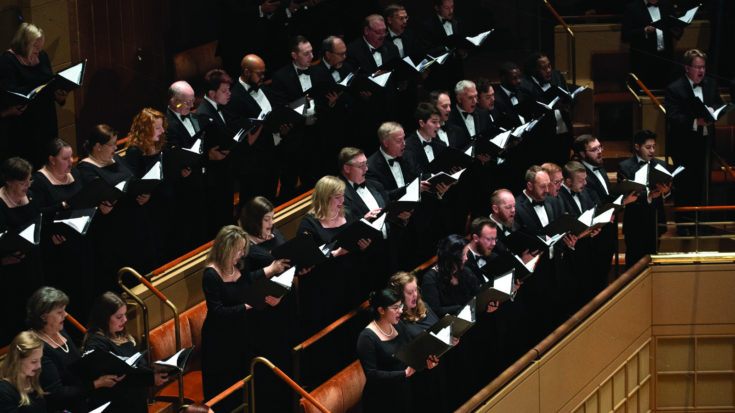
DALLAS SYMPHONY CHORUS, JOSHUA HABERMANN director

R. STRAUSS Metamorphosen
MOZART Requiem

Scored for 23 solo strings and composed during the final bombing raids of the Allies, Richard Strauss’s Metamorphosen (Metamorphoses) is a memorial to all those that perished in World War II.

Left unfinished at his death, Mozart’s Requiem remains one of his most personal works. Featured in the climax of multi-Academy Award-winning film Amadeus, Mozart’s epic funeral mass has a double-fugue and infectious melodies that indulge the best of choirs and is reflective of his astonishing genius.

FABIO LUISI MUSIC DIRECTOR LOUISE W. & EDMUND J. KAHN MUSIC DIRECTORSHIP

Fabio Luisi

Music Director

Louise W. & Edmund J. Kahn Music Directorship

Read More

Kim-Lillian Strebel

Soprano

Read More

Kelley O’Connor

Mezzo-Soprano

Read More

Spencer Lang

Tenor

Read More

David Leigh

Bass

Read More

Dallas Symphony Chorus

Chorus

Read More
JOSHUA HABERMANN CHORUS DIRECTOR JEAN D. WILSON CHAIR

Joshua Habermann

Chorus Director

Jean D. Wilson Chair

Read More

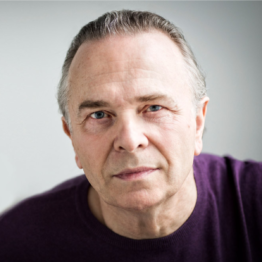
SIR MARK ELDER conducts
ISATA KANNEH-MASON piano

WAGNER Prelude to Die Meistersinger von Nürnberg
MENDELSSOHN Piano Concerto No. 1
ELGAR Symphony No. 1

The spirited prelude to Wagner’s comic opera The Mastersingers of Nuremberg highlights his uncanny ability to build suspense with powerful orchestral tuttis and pregnant pauses. He also inserts “leitmotivs” – reoccurring melodies that represent characters in the opera.

Mendelssohn’s brilliant First Piano Concerto is packed with cascading scales that will undoubtedly showcase the exceptional skills of Elton John scholar and BBC Radio favorite Isata Kanneh-Mason.

Elgar wrote his heroic First Symphony to impress the famed conductor Hans Richter, who considered it “the greatest symphony of modern times, written by the greatest modern composer, and not only in this country.”

Sir Mark Elder

Conductor

Read More

Isata Kanneh-Mason

Piano

Read More

CARLOS KALMAR conducts
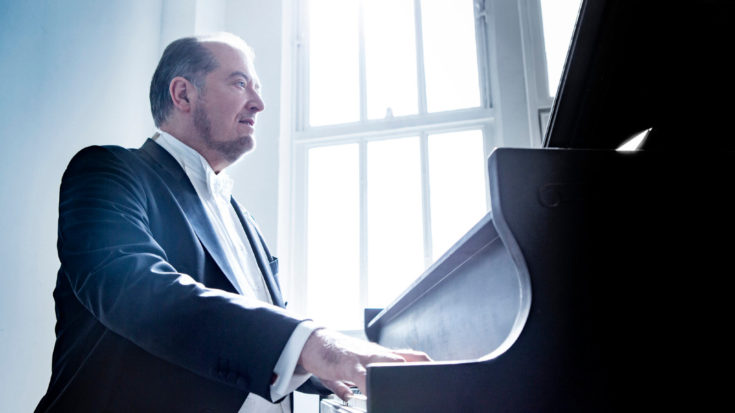
GARRICK OHLSSON piano

BEETHOVEN Piano Concerto No. 5, “Emperor”
SHOSTAKOVICH Symphony No. 6

Nicknamed the “Emperor”, Beethoven’s last piano concerto is bursting with heroic themes and virtuosic cadenzas, as well as one of the composer’s most tender slow movements.

While Shostakovich’s early symphonies are soaked in nationalism and conflict-to-triumph climaxes, his Sixth Symphony has a desolate first movement reflecting the anxiety he suffered by Stalin’s warmongering, which is resolved by a sinister scherzo and exuberant finale.

Carlos Kalmar

Conductor

Read More

Garrick Ohlsson

Piano

Read More

FABIO LUISI conducts
DAVID BUCK flute

WEBER Overture to Oberon
JOAN TOWER Flute Concerto
R. STRAUSS Aus Italien (From Italy)

The stirring overture to Weber’s comic opera Oberon opens with solo horn calls and uses high winds to depict important characters, a practice that had a profound influence on Wagner. Similarly, Joan Tower uses the low register of the flute to open her 1989 concerto, which features a giant tug-o-war between flute and chamber orchestra, climaxing in virtuosic flute arpeggios and scales.

Richard Strauss’s grand symphonic fantasy is a musical tour of Italy’s ancient ruins, bucolic countryside and the glory of its paintings, sculpture and music. Strauss harnesses the limitless power of the full orchestra and all the different instrumental colors to whisk the listener through the scenes of his journey.


Celebrate North Texas Giving Day on September 23, by joining us in the Meyerson lobby for a special musical number from students in the Young Strings program prior to that evening’s performance.


FABIO LUISI MUSIC DIRECTOR LOUISE W. & EDMUND J. KAHN MUSIC DIRECTORSHIP

Fabio Luisi

Music Director

Louise W. & Edmund J. Kahn Music Directorship

Read More
David Buck_Principal Flute_Joy & Ronald Mankoff Chair_Dallas Symphony

David Buck

Principal Flute

Joy & Ronald Mankoff Chair

Read More