2025/26 Season Farewell: Honoring Three Retiring Dallas Symphony Orchestra Musicians
2025/26 Season Farewell: Honoring Three Retiring Dallas Symphony Orchestra Musicians
This month, the Dallas Symphony Orchestra celebrates three esteemed members of our organization — Tom Demer, Section Viola; Pamela Askew, Section Viola; and Karen Schnackenberg, Principal Librarian (Jessie D. and E. B. Godsey Chair) — as they retire at the close of the season. We extend our heartfelt gratitude for their dedication to musical excellence and the lasting impact each has made on the DSO. Across their tenures, they have contributed meaningfully to the artistry and legacy of the orchestra, shaping countless performances and experiences for our audiences.
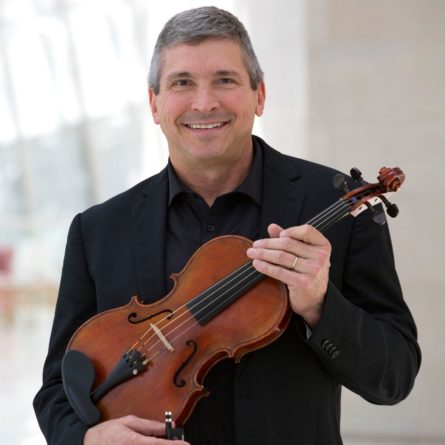
Thomas Demer, Section Viola
What year did you join the DSO?
1985
What do you remember most about your first year in the orchestra?
My stand partner on the 6th viola stand, Mike Glass, was also the orchestra librarian. In my first year, the veteran violist taught me to listen to the winds and not just to the strings. As a pro symphony librarian, he quickly showed me how to succinctly and accurately mark an orchestral viola part. His patient and impatient instructions have served me well for more than 40 years.
What do you remember about your DSO audition? What was that day like?
I auditioned in 1984, and John Geisel and I were the two finalists. That time, he got the job while I didn’t. In 1985, DSO created a 6th stand of violas and held another audition to fill the newly created viola position. My competition (John) now wasn’t in the running, and I was offered the job on my second try. What do I remember about my 1985 audition? Only that I had taken several previous major orchestra auditions, learned from each one, and felt prepared and confident. The audition, hearing myself alone in the huge Fair Park Music Hall, was actually fun.
If you relocated to Dallas, what was your first impression of the city?
My previous job was with the Fort Worth Symphony where my wife remained after I moved to Dallas Symphony. So, we’ve lived in Arlington, and I commute from Tarrant County.
How has the orchestra and the city changed during your tenure?
Only a handful of musicians from the start of my career remain in the orchestra, and each new hire noticeably changes the overall sound of the ensemble. The move from Fair Park Music Hall to the Meyerson Symphony Center, of course, was a monumental change for both the sound of the orchestra and for the job. I’ve worked for four music directors, and each one has put their stamp on the orchestra’s sound and style.
When I started here, Woodall Rodgers canyon freeway was not yet built, nor was Central Expressway expanded to its present form. DSO moved to a new downtown home and no longer played in the Dallas Opera and Ballet pits. The city has grown so much in four decades!
What are some standout memories from your tenure?
I had a Pops Fiddle Show sideline act, which Richard Kaufman featured with DSO and other US symphony orchestras in their Pops series. As we played concerts in Southern California last week, I recalled playing my fiddle show in 2 of the 3 SoCal venues we visited, plus one July 4 outdoor concert in Orange County for an audience of 10,000.
Since I was a teenager, I dabbled with mandolin. DSO has always used me on classical mandolin orchestral bit parts as needed. I might come back on mandolin next season for an aria in Mozart’s “Don Giovanni”. That’ll create a future standout memory.
In 1996, Andrew Litton programmed the Paul Whiteman big band version of Gershwin’s “Rhapsody in Blue” with himself on the solo piano, for a 3-week European concert tour. The arrangement calls for a tenor banjo, which, coincidentally, is tuned like a viola. Maestro Litton asked me to learn the tenor banjo part for that piece, which I did, and I have continued to play occasional orchestral tenor banjo bit parts ever since the memorable 1997 Europe tour.
What are you looking forward to most about retirement?
Being a full-time grandparent to our one-year-old granddaughter. And never having to decline invitations to family reunions around the country due to work schedule conflicts. And I won’t miss the commute, sometimes twice daily, from Arlington to Dallas on I-30.
Do you plan to use your “golden ticket” and join us in the audience next season and moving forward?
I would love to hear the great orchestra from the audience’s perspective.
Do you have any words of wisdom for the next person who will sit in your chair?
The young new hires are such amazingly good musicians! I’ll gladly offer advice, but only if asked.
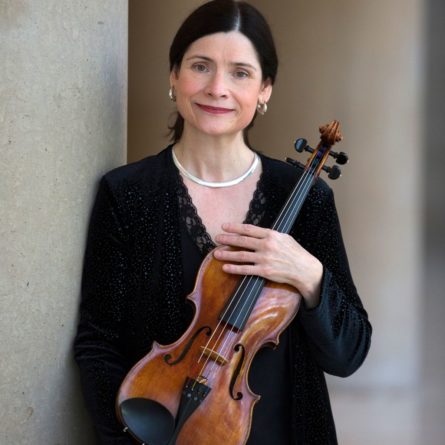
Pamela Askew, Section Viola
What year did you join the DSO?
I joined the DSO in September of 1989. My first day on the job was also the orchestra’s first day in the Morton H. Meyerson Symphony Center. It was an incredibly exciting time.
What do you remember most about your first year in the orchestra?
We opened the new hall with Mahler Symphony No. 2, and Van Cliburn played the Tchaikovsky Piano Concerto. That was the beginning of my 37 years with the DSO.
What are some standout memories from your tenure?
I think that the two things I will miss the most are being inside the sound of the orchestra, and the unique sonic communication with our audience. There is nothing like live music!
Do you have any words of wisdom for the next person who will sit in your chair?
My best advice for any new member of the orchestra is to leave your ego at the door and always have a pencil at rehearsal!
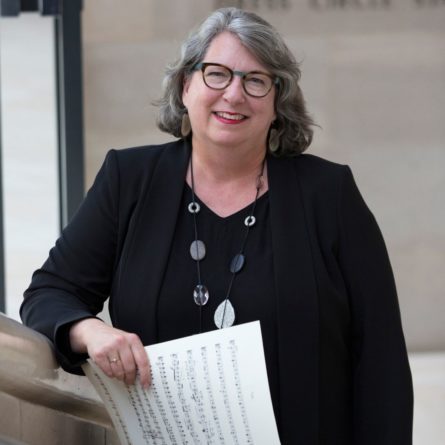
Karen Schnackenberg, Principal Librarian (Jessie D. & E. B. Godsey Chair)
What year did you join the DSO?
1990
What do you remember most about your first year in the orchestra?
My first year was overwhelming but so exciting. The work that needed to be done to set up the library in the one-year-old Meyerson was daunting and all-encompassing, but, at the same time, it was thrilling to have joined an orchestra at such a high level and to be part of building its next chapter. Getting to know the conductors, players, staff, board members, and working with such amazing artists was full of pinch-me moments.
What do you remember about your DSO audition? What was that day like?
During my audition, I remember of course being very nervous and worrying I wouldn’t know the answers to all the questions and especially being intimidated to meet with Maestro Eduardo Mata. It turned out to be a really good day. He and everyone else made me feel so welcome and very much at home.
If you relocated to Dallas, what was your first impression of the city?
My first impressions of Dallas – Big. Busy. Just what I wanted.
How has the orchestra and the city changed during your tenure?
How I’ve seen the city grow and change: From the Meyerson, I watched every day as the Winspear was born and built, and then the Arts District was eventually completed. The City of Dallas had realized a long-range plan, and the people really embraced and felt pride in it. We now had incredible world-class art happening on every corner of the district. Of course, Dallas and the metroplex have grown tremendously, and you do feel the big city vibe even more so than 35 years ago. As for the orchestra, I remember the first time I attended a performance by the DSO, and it was so impressive and inspiring. In the decades since, it has become even more refined with a powerful presence. As a colleague from another orchestra said when they visited, “it’s got that undeniable major orchestra sound.” The DSO is one of the best orchestras in the country, and I am so proud to be a member.
What are some standout memories from your tenure?
The memorial concert for Music Director Eduardo Mara. Preparation and performances with him such as La vida breve and Alexander Nevsky. The time he came to me after a rehearsal and told me the soloist had learned the wrong piece and could I please bring a full score. Going to Singapore for two performances. Working with Robert Shaw. The international tours, especially the 1997 European tour with Andrew Litton, and performing a memorial concert for Princess Diana. Concerts at the Proms, Carnegie Hall and the Concertgebouw. Working on Gershwin with Andrew Litton, including “Rhapsody in Blue” and “Dayful of Song.” The CD recordings and TV filming. Summer weeks at the Vail residency. Listening to the string section under Jaap van Zweden the first time. Jaap’s St. Matthew Passion and Beethoven symphonies. When Fabio Luisi joined us as Music Director. His recent performances of Mahler 2 with our incredible chorus. And, of course, I will never forget the two-year journey of preparing all four operas of the Ring Cycle and experiencing Fabio’s passion and commitment to that music. Sharing it all with my phenomenal orchestra library colleagues, without whom none of the above would have happened.
What are you looking forward to most about retirement?
I am looking forward to freedom from the schedule, enjoying leisurely mornings and not having to be anywhere on nights and weekends, as well as seeing my extended family and friends more often, traveling, reading A LOT, and not doing any more bowings!
Do you plan to use your “golden ticket” and join us in the audience next season and moving forward?
I absolutely do plan on using the golden ticket—I have my eye on some programs next season!
Do you have any words of wisdom for the next person who will sit in your chair?
My advice for the next librarian is: enjoy it all. Not only the big moments, but also the small ones. Even the really tough times and projects that you think will be impossible to get through. Because this music all around you every day is everything. It’s what we work towards in our training. And knowing we have a part in creating this great art is why we do it. It’s the richest life one can have.